In this blog, Millie Welch, Knowledge and Learning Officer, shares the key understandings of what partnership working is like within the third sector.
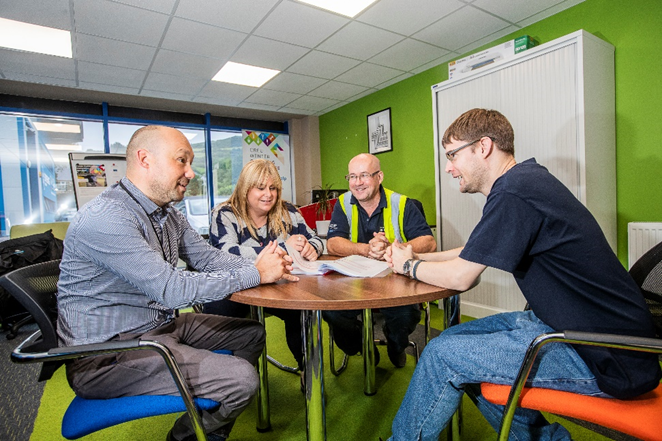
The National Lottery Community Fund recently commissioned The Funding Centre to conduct a rapid research review on partnership working within third sector organisations in Wales. The purpose of the review was to build our knowledge on how these organisations use partnerships to:
- Develop and deliver projects
- Increase understanding about the opportunities and challenges
- Highlight what organisations and funders need to do to combat issues and make partnership projects as successful as possible.
What is partnership working?
Any form of collaborative working was considered partnership working within this research. This covered a vast range of partnerships from all different shapes, sizes, sectors, locations, and formalities.
Formal partnerships are when two or more organisations solidify the partnership with a contract, usually a partnership agreement form. Informal partnerships are any form of collaborative working which isn’t bound by a contract. This allows the sharing of resources, expertise, client base, and learning, but without the contractual obligation.
What are the benefits?
With 74% of respondents reporting a positive attitude to partnership working, it is clear that organisations recognise that partnership working brings about many benefits which would be difficult to achieve on their own. The top three benefits to partnership working, chosen by respondents, were:
- Involving beneficiaries and communities in the project: By working collaboratively, organisations can increase the number of beneficiaries they are providing the service and support to.
- Integrated and joined up support and services: By combining services together allows organisations to work more efficiently and effectively, as well as reducing the risk of duplication.
- Establishing ongoing relationships of collaboration, knowledge sharing, and referrals: Building relationships with other organisations opens the door for future opportunities and collaborative work. Organisations can build their network and relationships with other organisations.
The above three benefits highlight the more practical based benefits related to partnership working. Other benefits include:
- Increase access to shared skills, expertise, and resources – Allows organisations to learn from others and may lead to opportunities they had been unaware of.
- Promotes strategic delivery – Creates a service which maximises the capabilities of all partners, is financially savvy, and provides a better outcome for beneficiaries.
- Support enhanced learning and development – Sharing of expertise and experiences can help organisations learn and grow by sharing best practice.
Rob Roffe, Head of Knowledge and Learning, The National Lottery Community Fund in Wales said: “The National Lottery Community Fund welcomes the findings of this research which highlights there is strong and widespread consensus of support for The Fund’s strategic intent to work through partnerships. Crucially, most organisations feel that partnership working adds value and has the potential to strengthen the impact of their work.”
Examples of The Fund’s approach to partnership working can be found through funding programmes including Helping End Homelessness and Mind Our Future.
What are the risks?
When considering partnership working, it is important to consider the challenges, disadvantages, or barriers which organisations may face. If not managed correctly, these can become substantial problems, so third sector organisations should be aware of them and prepare where necessary to mitigate the risks.
- Barriers to access – Finding partnership opportunities and identifying partners can pose a challenge, especially for small organisations.
- Capacity and resource – Partnership projects can take time and effort which can be challenging for organisations lacking in resources. This can pose extra difficulties if previous funding applications have been unsuccessful.
- Complexity – Partnerships can provide issues surrounding relationship management, with many working cultures and different forms of governance. The time required to manage these relationships can often distract from the delivery of the partnership project.
- Conflict – Partnerships run the risk of disagreement, frustration and conflict between partners, especially if expectations, roles and obligations are not clarified at an early stage.
These are the most common and significant problems which partnerships within the third sector may face. However, most partnerships can overcome these risks to create successful and impactful projects. There are many ways partnerships can mitigate the risks which we have presented above.

One organisation delivering a project through partnership working is Platfform For Change. Funded through the Mind Our Future programme, Platfform For Change is using partnership working to provide mental health support to young people. The ‘Power Up’ project is placing young people at the heart of the development by having a youth advisory group who help co-produce the projects activities, tailoring them to fit with what young people feel best supports their mental health.
Platfform For Change is the lead partner on this project, supported by other partners including; Cardiff and Vale University Health Board, Cardiff Council, The Vale of Glamorgan Council, Cardiff Metropolitan University, Cardiff YMCA, Ethnic Youth Support Team (EYST), Llamau Ltd, ProMo-Cymru, and iBme UK.
In the development phase, the project gave 750 young people across Cardiff and the Vale of Glamorgan a voice surrounding the future of their mental health support. In their first year of delivery, they gave 1-1 mental health support to 80 young people. This success is something which would not have been possible without the use of partnership working to support this project.
To read the summary report of ‘Partnership Working: Lessons from the Third Sector in Wales’, please click here.
 The National Lottery Community Fund Blog